
Our Process
How We Work
A forensically-driven, four-stage methodology built for total structural waterproofing confidence.
4-Step Methodology
Understand · Recommend · Implement · Improve
- 01
UNDERSTAND
Forensic evaluation of specific project architectural metrics, environmental exposure, concrete composition and unique site structural dynamics. Every recommendation begins with a validated diagnosis.
- Key Actions
- Site visit and visual moisture mapping
- Efflorescence and crack pattern analysis
- Non-destructive moisture scanning
- Hydrostatic pressure source identification
- 02
RECOMMEND
Formulating technically precise, cost-optimized chemical specifications, membrane drawings, and customized application methodologies. No generic solutions — every system is purpose-built.
- Key Actions
- Material selection matrix development
- System specification documentation
- Membrane and detail drawing preparation
- Application sequence planning
- 03
IMPLEMENT
Driving on-site engineering support, applicator surface preparation control, critical milestone verification and stringent quality check gates. We stay present through execution.
- Key Actions
- Surface preparation supervision
- Applicator certification and training
- QA/QC milestone gate inspections
- Real-time deviation correction
- 04
IMPROVE
Establishing long-term structural resilience, radically minimizing lifecycle repair outlays and ensuring sustained material performance. Knowledge transfer to your maintenance teams.
- Key Actions
- Post-application flood testing
- Maintenance protocol documentation
- Lifecycle performance monitoring setup
- Warranty compliance verification
Industry Domains
Sectors We Serve
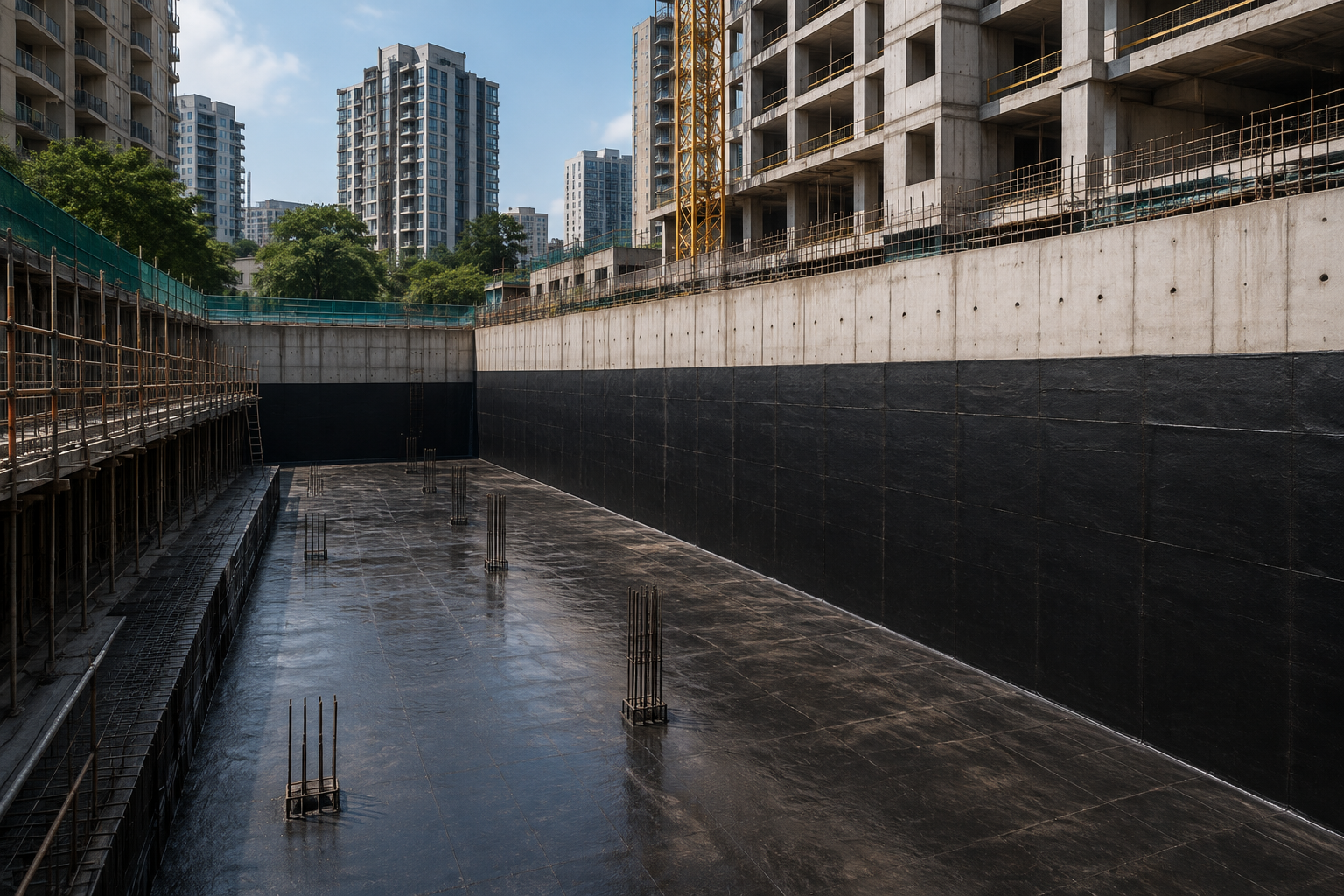
High-Rise Basement Waterproofing
- Hyderabad, India
The Problem
Severe hydrostatic pressure causing continuous groundwater ingress in the multi-level basement of a 25-story residential tower, threatening foundation integrity and electrical installations.
Forensic Approach
Deployed non-destructive moisture mapping to isolate primary capillary tracks. Executed precision chemical injection grouting using hydrophobic polyurethane to create a flexible, impermeable curtain behind the retaining walls.
The Result
Achieved a 100% success rate in halting active leaks within 48 hours. Structural audit confirmed restored integrity, allowing the project to proceed on schedule.
25
Stories
100%
Sealed
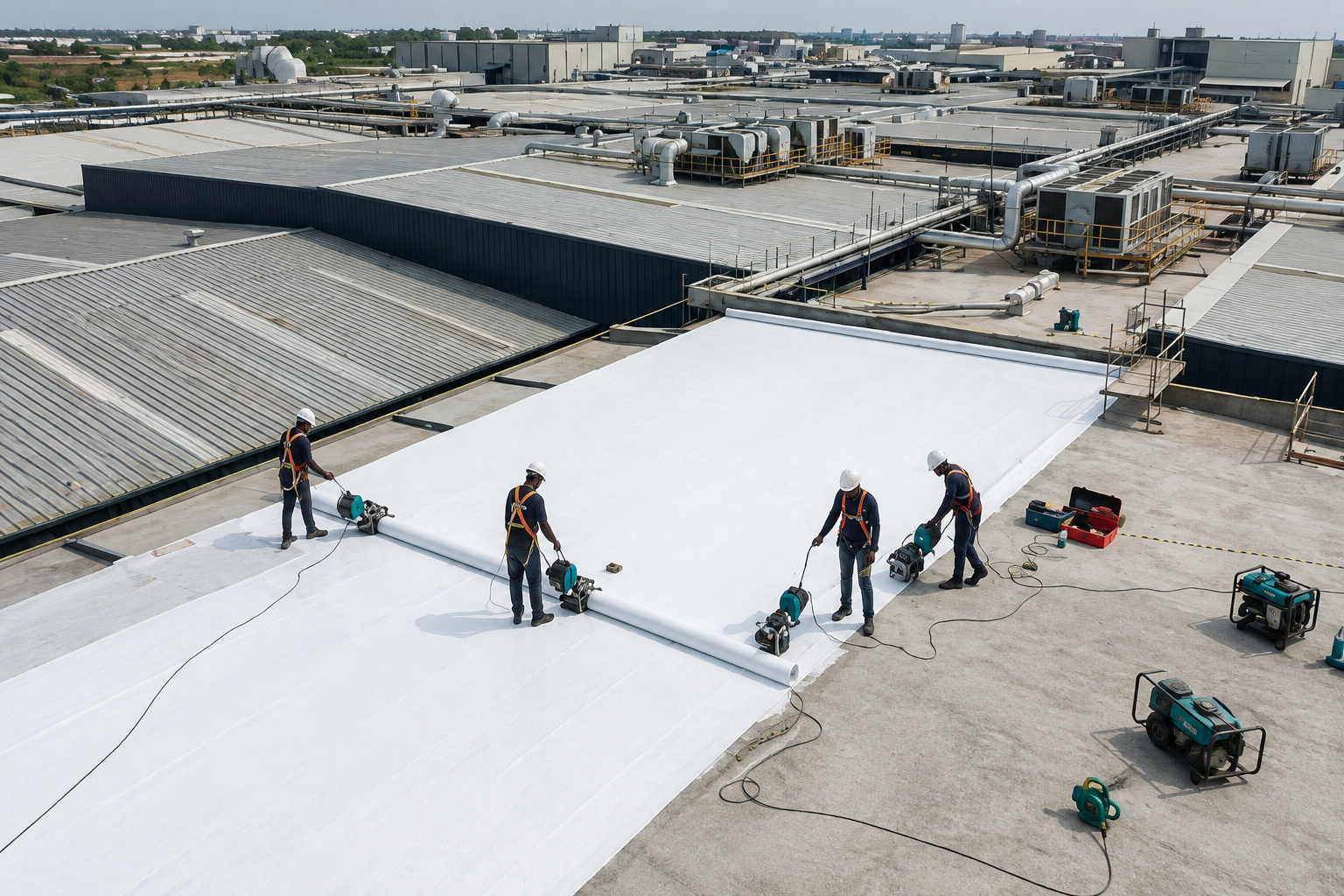
Industrial Roof Rehabilitation
- Telangana, India
Problem
Chronic thermal expansion leading to widespread membrane failure and internal production equipment damage across a massive facility.
Forensic Approach
Conducted comprehensive thermal mapping to identify stress nodes. Engineered a custom multi-layer membrane specification designed for extreme UV exposure and high structural movement.
Result
Secured the 15,000 sq.ft. facility with a seamless, highly reflective barrier, significantly reducing interior temperatures while eliminating moisture ingress.
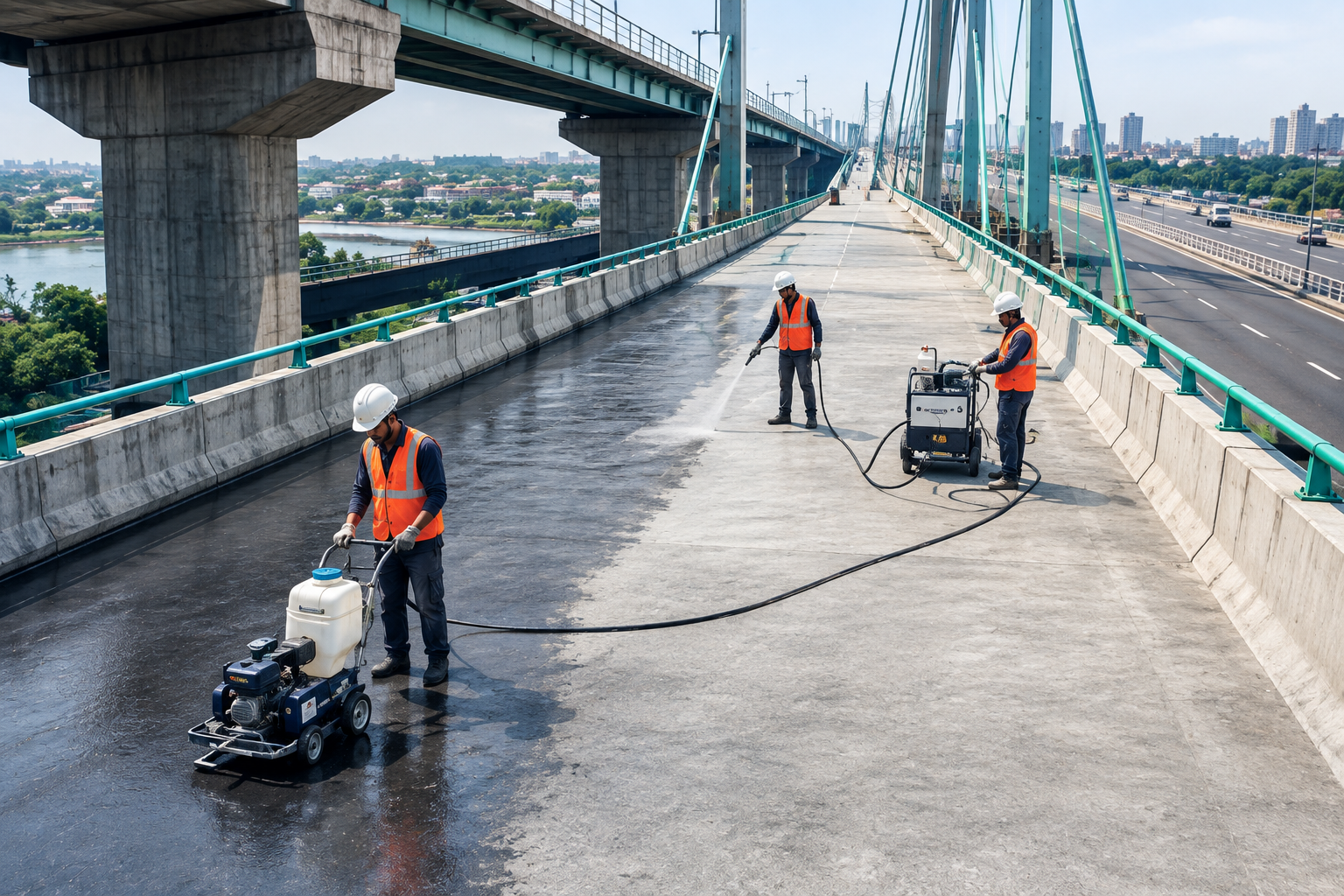
Infrastructure Moisture Management
- Telangana, India
Problem
Accelerated chloride-induced corrosion in critical bridge deck reinforcement due to inadequate initial moisture barriers and heavy traffic loading.
Forensic Approach
Implemented a specialized regimen of migrating corrosion inhibitors combined with advanced crystalline waterproofing chemicals designed to penetrate deeply into the concrete matrix.
Result
Recent long-term durability audits confirm active corrosion has been halted. The treated decks exhibit enhanced structural lifespan extending decades beyond original projections.
Forensic Audit Workflow
Structural Waterproofing Audit Sequence
Every consultation cycle executes this forensic verification sequence to eliminate arbitrary product application errors and ensure source-level remediation accuracy.
Project Lifecycle
From initial leak detection to final seal.
1. Diagnostics
Comprehensive moisture mapping and non-destructive testing to identify the root cause of water ingress.
2. Chemical Engineering
Formulating tailored chemical injection and barrier solutions specific to the structural material and environment.
3. Execution & Audit
Precision application by certified technicians followed by rigorous structural integrity audits to verify the seal.
Sector Breakdown
Detailed stats on Residential vs Industrial success.
Residential Projects
- High-Rise Basements Secured
- 450+
- Success Rate within 48h
- 98.5%
- Average Lifespan Extension
- 20 Yrs
Industrial Projects
- Square Footage Protected
- 1.2M+
- Facilities Rehabilitated
- 120+
- Downtime Reduction
- 40%
Eco-Friendly Engineering
Sustainability Impact
Effective waterproofing is not just about asset protection; it’s a critical component of sustainable building practices. By extending the operational life of existing structures, we significantly reduce the need for demolition and new construction materials.
Reduced Material Waste
Preventing structural decay minimizes concrete and steel replacement.
Energy Efficiency
Thermal reflective membranes lower HVAC loads in large facilities.
30%
Average reduction in lifecycle carbon footprint for rehabilitated structures.